Recipes and the food on our farm

Monday, October 14, 2013

Wine Making at Home with Ant

Every year in October since I was a kid I can remember my family made wine. I am continuing this tradition with my children. The process of making white and red wine from grapes to table takes at least two years. Now days the chemistry of making wine has become very involved and complicated and can easily ruin a good batch of wine, but I tend use a more traditional approach the way my Dad makes wine and with a little bit of chemistry and a lot of patience.
  This year we are making chardonnay, malbec and cabernet  franc.Testing the sugar levels with a hydrometer.

The hydrometer is floating in the grape juice to measure the sugar level. It should be about 13% alcohol when the sugar is converted to alcohol.

  The picture shows sterilization of the carboys with potassium metabisulfite, citric acid and water mixture before filling the carboy with maturing wine. The wine goes through a secondary fermentation know as malalactic fermentation. After the first month, the fets (our italian family dialect) settles to the bottom. The wine will be racked meaning the clear wine will be gently syphoned off the top of the batch into a sterilized carboy to set again leaving the fets or sediment pulp behind. Every 6 or more months the wine will be racked again. This process creates a pure clear wine, but in the wine industry the wine would be forced through filters as much as 26 pads deep to create the clear wine. 

  Our wine cellar maintains a temperature of 55 degrees with very little temperature variation through the seasons which is optimal for the maturing wine. Each 5 to 6 gallon carboy has an air lock closure to let co2 escape without oxygen getting in to spoil the wine.
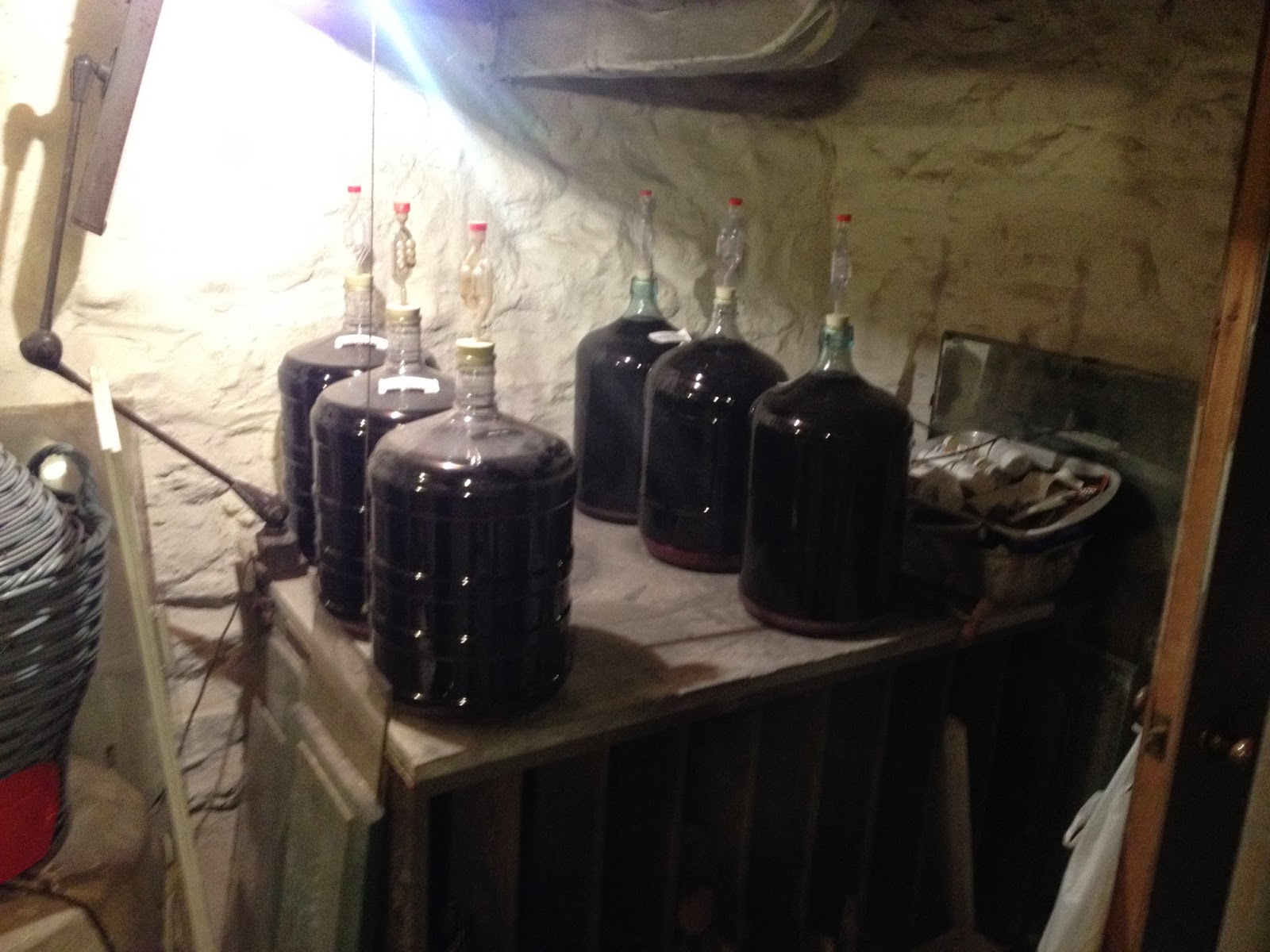

Here is the 2011 wine (Pinot Noir and Merlot). We will begin enjoying this wine during the holidays. 

If you are interested making wine and would like to join us now or next October let us know. 

Thursday, October 10, 2013

Chicken of the Woods

!Important! If you aren't sure what it is don't eat it!

But, If you are so lucky as to find this beauty growing on a hardwood tree, enjoy.  Be careful to cut away from the root so you can harvest it next year too. Even my children will eat this right up!
Hen of the Woods

Gently clean or wash
Dip in egg
Bread with your favorite bread crumb mix 
Fry until crispy and golden


The original vegetarian chicken tender. Served with mashed potatoes and white gravy and of course something green.

Man o man this is good!

Tuesday, October 8, 2013

Fizzy Lifting Drink...

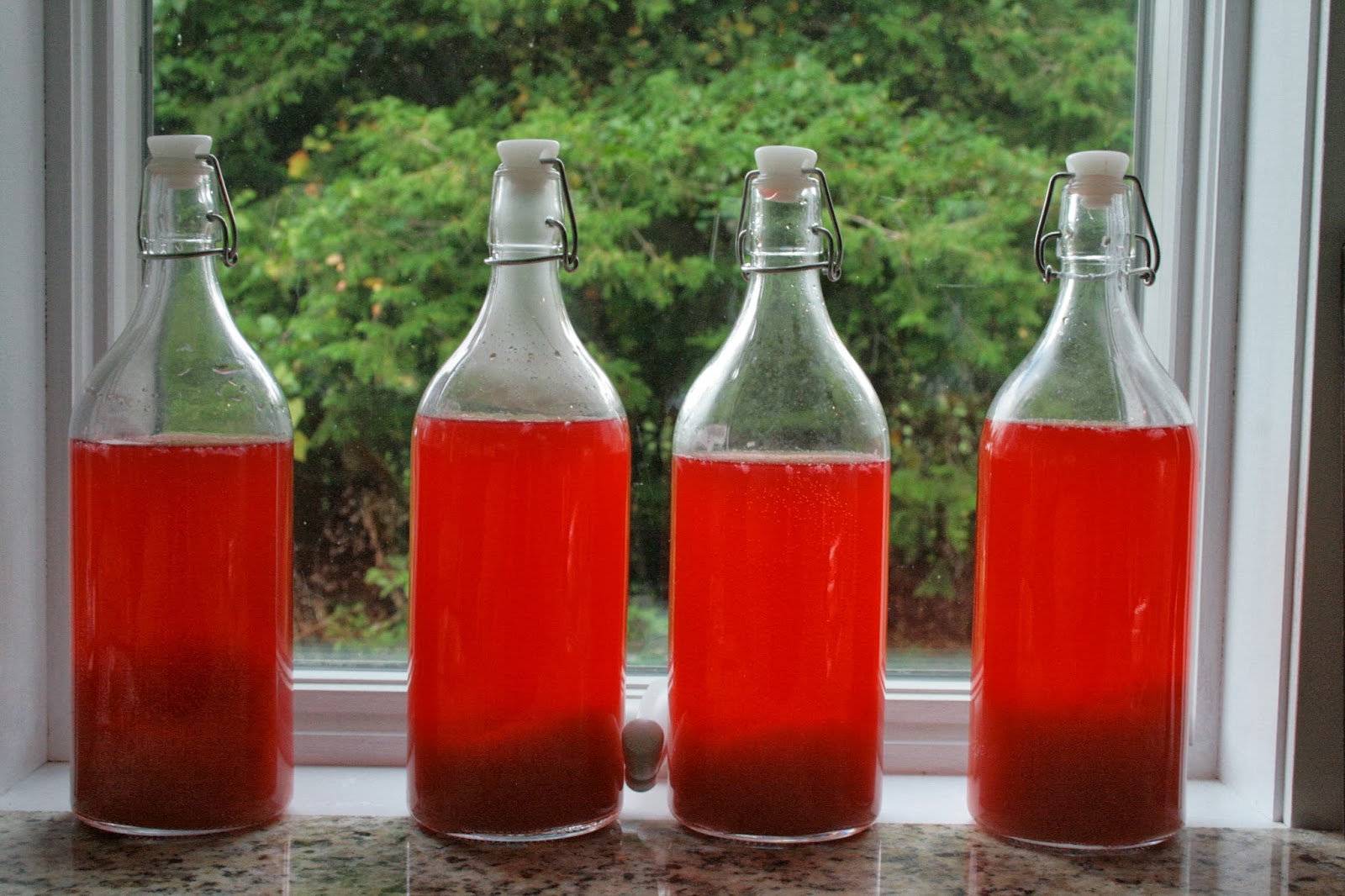
Lacto Fermented Prickly pear soda

This is really the easiest recipe for lacto fermented soda and the way I make all the flavor variations of one gallon of soda.

All you need is the #2:
2 half gallon wide mouth mason jars
2 cups of fruit purée 
2 cups of sugar
1 cup of whey
2 lemons
The rest is filtered water

Fill half gallons with equal parts and set aside for 2 days.
Skim off the foam and discard
Taste test
Bottle in poptop bottles (Ikea) with plenty of headspace
I do use one plastic seltzer bottle that I can squeeze daily to check bottle pressure.
Leave bottled for 3 days.

Then enjoy!


Monday, July 16, 2012

Civet de Lievre ou de Lapin

Mister Bunny was eating my Watermelon plants down. How is this TX lady supposed to keep up with that? I took care of it.

A little prep

a little braising

Red wine sauce

and a simmer


One small tender rabbit 
Salt and pepper
half and onion
2 grated carrots
2 small mince celery 
a few dashes of dried thyme and sage
1 cup wine
2 cups water
a roux of apple smoked bacon lard and 1 tbsp flour to make the gravy
1 tsp of my 2:1 reduced organic balsamic

YUM YUM! and now the watermelon is back on track!

By the way this was our first time to eat rabbit and it tasted looked basically like chicken.  I took it to a family dinner.


Thursday, December 15, 2011

Locavore Eggnog


Eggnog: 3 Simple Local Ingredients

In my community, we have what it takes to make the best drink that the holiday has to offer... Eggnog!
No stabilizers, emulsifiers or hard to pronounce chemical compounds needed for this seasonal favorite.  

Milk  A small sustainable dairy and working farm just over the hill from my house has been producing since the 1800s.  Duryea Farm supplies the best milk around through the neighborhood Co-op. I can also sign up to buy raw unpasturized milk.
Eggs   I am getting over a dozen eggs a day with my hens. You can't get any fresher than that.
Maple Syrup  Just about every home in this area has a sugar maple in the yard.  Anyone can tap their tree(s) in Febuary, boil down the sap to a syrup and make an amazing batch of homegrown maple syrup and we try to make what we will used in the year. 

The recipe serving size is per person so increase as needed for the freshest Eggnog one can get without all the additives of store bought. 

1 cup whole milk
1 fresh egg
1 tbsp maple syrup

Blend it up with a hand mixer.

This is the easiest recipe for pleasing the child in all of us. There are, of course, other ingredients to spice it up to the party cocktail level.   Try a dash of nutmeg and dribble of Hudson Baby Bourbon from Tuthilltown Spirits in Gardiner, NY for a little more holiday cheer!

Tuesday, November 16, 2010

Yogurt


Since last summer I have been making yogurt, delicious european style plain yogurt with live active culture and milk from the cows up the street. My girlfriend fromtemptressyarn.com show me how. With some experimentation with different cultures I think I have finally gotten it down.

We add a little home canned jam and some granola and there you have it... a good homemade breakfast.


Homemade Yogurt
Ingredients
Almost a half gallon whole milk (gal minus a cup)
1 single serving container of Fage yogurt

Process
1. Heat milk to 185 degrees F in a double boiler ( this is pasteurizing)
2. Cool a half a cup of milk to 120 degrees and add the room temp Fage greek style but The farm up the street makes great yogurt and I usually use theres as a starter
3. Let the rest of the milk cool to 112 degrees ( I speed this along by changing the hot water in the double boiler to cold)
4. When your milk reaches 112 degrees mix in the Fage mix and stir well
5. Pour into a two quart Mason Jars with lids.
6. Place in a 120degree water bath and set aside for 4 or more hours.
7. Place in the fridge over night.

We add homemade jam and granola and yummmm!


Once you have made your first batch and have a half a cup left you can use that half a cup to start the next batch of yogurt. Just follow the directions and replace the Fage yogurt in the recipe with your remaining half cup of yogurt. After making a few batches of yogurt the culture may become tired. Start over with a new batch and starter (fage). 

LinkWithin

Related Posts with Thumbnails